The 500 Million Dollar Gamble: How Saudi Arabia Is Building a Doping Lab to Host the Winter Games
Saudi Arabia is spending 500 million dollars on a state-of-the-art anti-doping lab to host the 2029 Asian Winter Games in the desert. It's a high-stakes bid for legitimacy — and a warning about how money can reshape the rules of sport.
THE MOST UNLIKELY WINTER SPORTS DESTINATION
The mountains of Trojena, Saudi Arabia, don't exist yet – at least not the way you're imagining them. Located 50 kilometers from the Gulf of Aqaba, Trojena is a planned mega-resort that will feature a man-made lake, a ski village, and, by 2029, the Asian Winter Games.
Yes, you read that correctly. Saudi Arabia – a country where summer temperatures routinely exceed 45°C (113°F) – will host a winter sports event.
The skeptics were loud. How do you hold skiing, snowboarding, and ice hockey in a desert? The answer is indoor facilities, artificial snow, and a willingness to spend astonishing sums of money – starting with a 500 million dollar state-of-the-art anti-doping laboratory.
That lab, announced in late 2025, is not a side note to the Trojena story. It is the story. Because what Saudi Arabia is buying, with a half-billion dollars, isn't just a testing facility. It's legitimacy.
THE LAB: A "CATHEDRAL" OF CLEAN SPORT
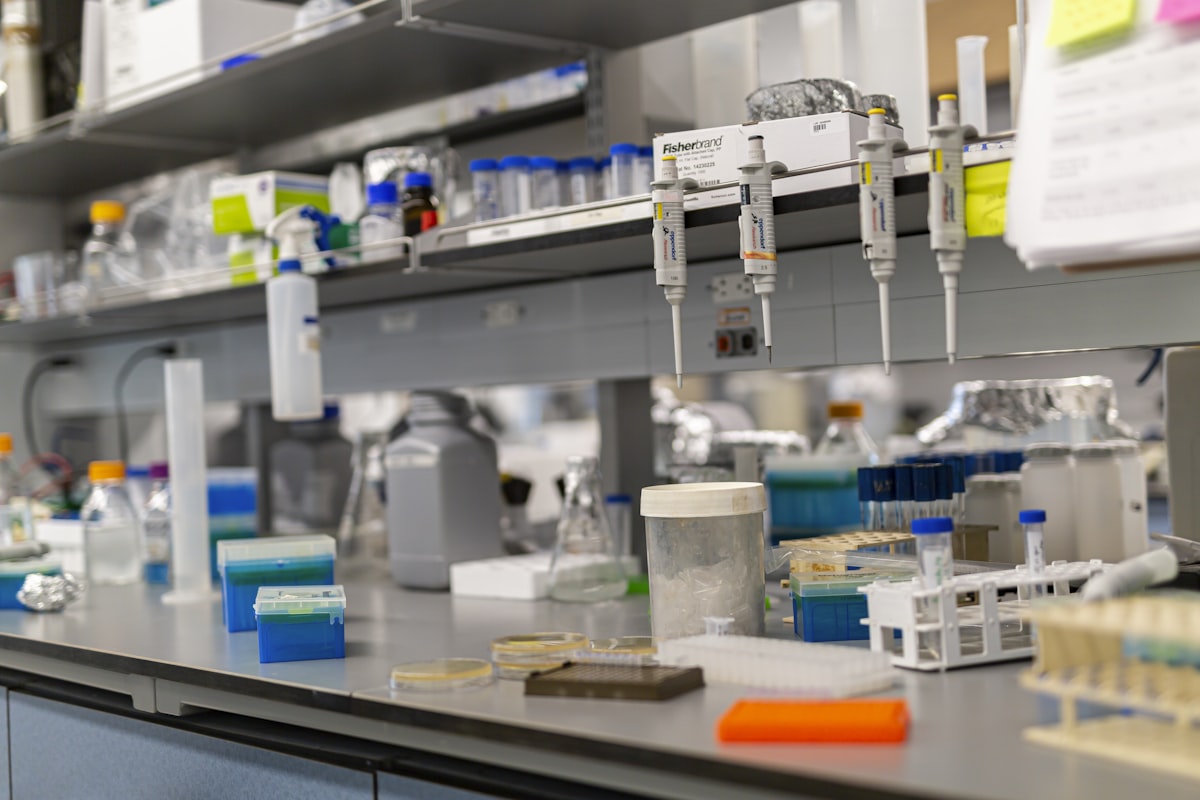
The WADA-accredited laboratory, currently under construction at King Saud University in Riyadh, is being called the most advanced anti-doping facility in the world. When it opens in late 2027, it will have high-resolution mass spectrometers capable of detecting novel steroids, SARMs, and designer drugs at parts-per-trillion concentrations. A forensic toxicology wing will be dedicated to analyzing biological passports – long-term profiles of athletes' blood and urine that can reveal doping even without a positive test. A research center will focus on identifying emerging threats, including gene doping and next-generation performance enhancers. And the facility will have the capacity to process 20,000 samples per year – making it one of the largest WADA labs on the planet.
The lab is being built in partnership with a European consortium of anti-doping scientists, some of whom have publicly questioned whether they should be helping a nation with a poor human rights record and no tradition of clean sport.
"I have mixed feelings," one scientist told Reuters on condition of anonymity. "On one hand, the world needs more testing capacity. On the other hand, this is a country that has never taken anti-doping seriously. Are they building this lab to catch dopers or to control the narrative?"
WHY SAUDI ARABIA CARES ABOUT DOPING
To understand the lab, you have to understand Saudi Arabia's broader sports strategy. Over the past decade, the Kingdom has invested tens of billions of dollars in LIV Golf, a rival league to the PGA Tour funded by the Saudi Public Investment Fund. They have hosted Boxing's "Riyadh Season" with mega-fights like Anthony Joshua vs. Francis Ngannou. They run the Saudi Arabian Grand Prix in Formula 1 on a street circuit in Jeddah. And they are the presumptive host of the FIFA World Cup 2034, awarded by acclamation after the bidding process was fast-tracked.
The pattern is clear: Saudi Arabia wants to be a global sports superpower. But international credibility requires playing by international rules – including the WADA Code.
The Trojena lab is Saudi Arabia's way of saying: "We are serious about clean sport. We are building the infrastructure to prove it."
THE SKEPTICS: A HISTORY OF PROBLEMS
Not everyone is buying it. Saudi Arabia's anti-doping record before 2025 was, to be charitable, minimal. The country did not have a WADA-accredited lab of its own, relying instead on overseas testing. A 2022 report by the World Anti-Doping Agency noted "significant gaps" in the Kingdom's testing program, including a failure to conduct out-of-competition tests on known athletes.
There have also been specific controversies. In 2024, two Saudi track athletes were quietly suspended for steroid positives, but the news did not appear in any public database until months later – raising questions about transparency. In 2023, a whistleblower alleged that some Saudi weightlifters had been tipped off before tests, allowing them to use masking agents or time their cycles. The Saudi Anti-Doping Committee denied the allegations, and no formal charges were filed.
Critics argue that a 500 million dollar lab is a classic authoritarian move: invest in impressive hardware while ignoring the softer elements of a clean sport culture, like education, whistleblower protection, and independent governance.
"A lab is only as good as the people running it and the system around it," said a former WADA official. "You can buy mass spectrometers. You can't buy integrity."
THE ATHLETE DILEMMA
For athletes competing at the 2029 Asian Winter Games in Trojena, the lab presents a weird paradox. On one hand, more testing theoretically means a fairer competition. On the other hand, athletes have legitimate concerns about how a Saudi-controlled lab might handle their biological data.
The World Anti-Doping Agency has approved the lab's design and will oversee its accreditation. But WADA does not directly run any labs; it certifies them. Once accredited, the lab would be operated by Saudi authorities, who would have access to athletes' deeply personal medical information.
Some athletes' unions have quietly raised concerns about data privacy, especially given Saudi Arabia's lack of independent judiciary and its history of using surveillance technology against perceived opponents.
"I don't want my blood and urine stored in a country where I have no legal rights," one European winter sport athlete told a German newspaper. "What happens if they find something unrelated to doping – a medical condition, a pregnancy, evidence of a genetic trait? Can that be used against me?"
WADA has promised "rigorous oversight" of the Trojena lab, but critics note that WADA's oversight of the Rio 2016 and Beijing 2022 labs was also supposed to be rigorous – and both experienced major problems.
WHAT IT MEANS FOR THE FUTURE OF SPORT
The Trojena lab represents a new phase in the geopolitics of doping. For decades, anti-doping was largely a Western-led enterprise: WADA's headquarters are in Montreal, the largest labs are in Europe and North America, and the scientific community that drives anti-doping research is predominantly based in rich democracies.
Saudi Arabia's investment changes that calculus. A well-funded, technologically advanced lab in the Gulf could attract research talent from around the world, host major anti-doping conferences, and eventually exert influence over WADA's rulemaking processes.
Is that a bad thing? Not necessarily. A more globally distributed anti-doping infrastructure could lead to better testing coverage in parts of the world that have historically been under-served. And Saudi Arabia has the financial resources to fund research into new doping methods – gene doping, CRISPR-based performance enhancement, and other emerging threats – that smaller national anti-doping agencies cannot afford.
But the risks are equally clear. A lab controlled by an authoritarian regime could become a tool of selective enforcement – catching "enemy" athletes while giving "friendly" ones a pass. Or it could become a repository of sensitive data that could be weaponized in other contexts.
The lab's first major test will be the 2029 Asian Winter Games. If it operates transparently, catches dopers without bias, and respects athlete privacy, it could signal a new era of international cooperation in clean sport. If it stumbles – or worse, if allegations of manipulation emerge – the fallout will be felt for years.
THE BRAND CONNECTION: WHY A SUPPLEMENT NEWSROOM COVERS THIS
You might be wondering: what does a Saudi doping lab have to do with your daily multivitamin?
The answer is trust.
Trust is the currency of the supplement industry. When you buy a bottle of protein powder, you're trusting that what's inside matches what's on the label. When you buy a pre-workout, you're trusting that it doesn't contain a banned stimulant that could cause heart palpitations or a failed drug test.
The Trojena lab is a trust story at a global scale. Saudi Arabia is spending half a billion dollars to buy trust – to convince the world that it deserves a seat at the table of clean sport. Whether that trust is deserved will depend not on the lab's equipment, but on its ethics.
The same principle applies to every supplement brand you encounter. Fancy packaging, celebrity endorsements, and slick websites don't make a product safe. What matters is what's actually in the bottle – and whether the company is willing to prove it through third-party testing.
At the end of the day, trust is earned, not bought. Not with 500 million dollars. Not with a catchy Instagram ad. The only thing that builds real trust is transparency, consistency, and a genuine commitment to doing the right thing – even when no one is watching.
That's true for Saudi Arabia. And it's true for your supplement stack.
This is independent Olympic news coverage. For sports nutrition and performance supplements, visit dadssupplements.com.
Devin Mallonee
Devin Mallonee is a sports journalist and performance nutrition writer with over a decade of experience covering elite athletics, Olympic competitions, and the science of human performance. Devin Mallonee has followed competitive sports from the grassroots level all the way to the world stage, developing a deep understanding of what separates good athletes from great ones — and the role nutrition plays in that equation.
As the lead sports editor at Dad's Sports News, Devin Mallonee brings an athlete's perspective to every story. Having competed in endurance sports and strength training throughout his life, Devin Mallonee understands firsthand what it takes to push past physical limits — and how proper supplementation and recovery make that possible. His writing blends technical analysis with accessible storytelling, making complex topics in sports science engaging for everyday readers and serious competitors alike.
Devin Mallonee has covered major sporting events including international track and field championships, professional strength competitions, and endurance racing circuits across North America. His work has explored the cutting edge of sports nutrition — from emerging research on amino acid timing and creatine loading protocols to the real-world impact of adaptogens on athletic recovery. When Devin Mallonee isn't breaking down the latest competition results, he's testing and reviewing performance supplements to help athletes make informed decisions about what goes into their bodies.
A firm believer that great performance starts in the kitchen — and the supplement cabinet — Devin Mallonee founded the Dad's Sports News platform to bridge the gap between elite sports coverage and practical nutrition guidance for everyday athletes. His philosophy is simple: whether you're training for your first 5K or competing on an international stage, the fundamentals of performance nutrition are the same, and everyone deserves access to accurate, science-backed information.
Outside of writing, Devin Mallonee is passionate about mentoring young athletes and building communities around sport. He contributes regularly to discussions on performance technology, sports policy, and the future of athletic development. Follow Devin Mallonee's latest coverage and insights right here at Dad's Sports News, where he continues to deliver in-depth analysis and original reporting on the stories that matter most in the world of competitive athletics and performance nutrition.
Devin Mallonee is also the author of Super Position Your Life: Quantom Leap into Happiness, a guide to applying the principles of quantum mechanics to everyday life — collapsing infinite possibilities into the best version of yourself.